
Medicaid Support for Essential Care at Risk

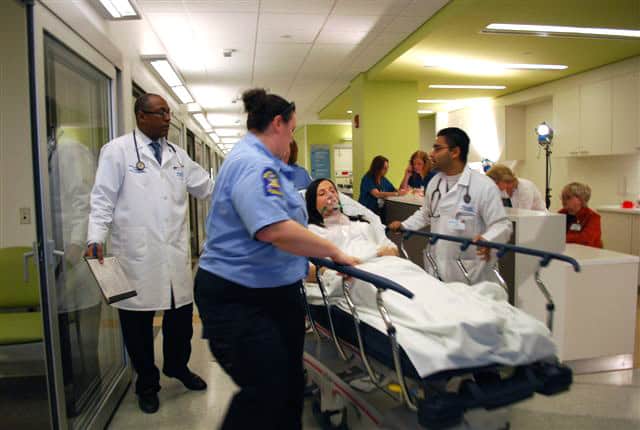
Recent reductions in Medicaid coverage and payments for services provided to Medicaid beneficiaries are projected to increase hospital uncompensated care costs by $466 billion over the next 10 years. These cuts will disproportionately harm essential hospitals, jeopardize access to lifesaving services that communities rely on, and have ripple effects on local economies.
Why Medicaid Matters
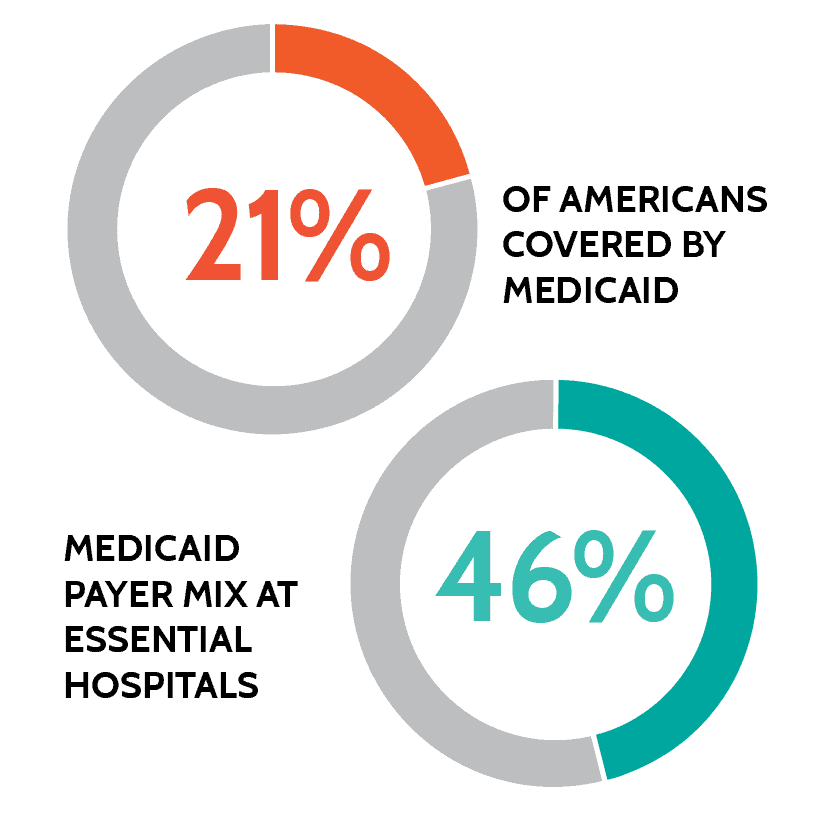
Medicaid covers 21 percent of Americans, or 79 million people. 41 percent of all births are covered by Medicaid. Families, children, and seniors all depend on the program to stay healthy and productive. Essential hospitals care for more people with Medicaid coverage than other hospitals. They also provide critical emergency services, outpatient care, and train tomorrow’s workforce. Medicaid is vital to allowing essential hospitals to connect their patients to care.
Medicaid cuts threaten the health of communities across the nation
What Can Congress Do?
Congress should ensure that the Centers for Medicare & Medicaid Services (CMS) does not reduce Medicaid funding by more than what Congress intended
Protect Essential Care
Congress should protect care for the most vulnerable Medicaid patients by ensuring they have the resources they need to access care.
Designate Essential Hospitals
Ensure that resources go to where they are needed most by establishing a federal designation of essential hospitals. Learn why essential hospitals are different.
Resources
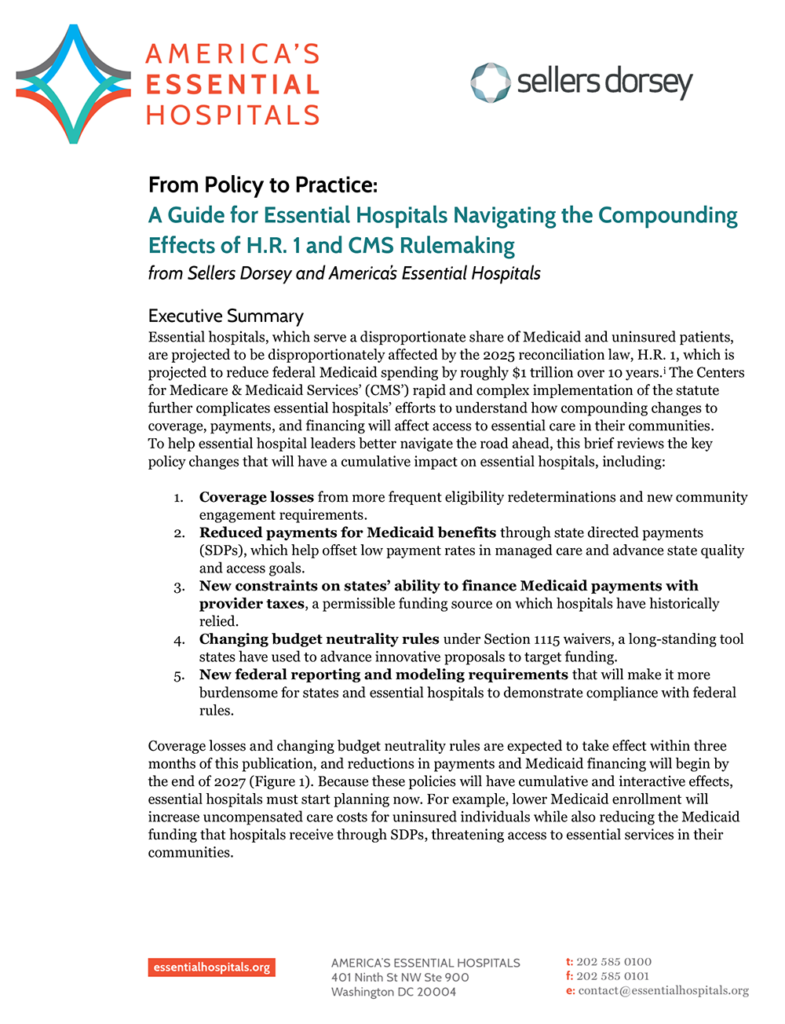
From Policy to Practice: A Guide for Essential Hospitals Navigating the Compounding Effects of H.R. 1 and CMS Rulemaking
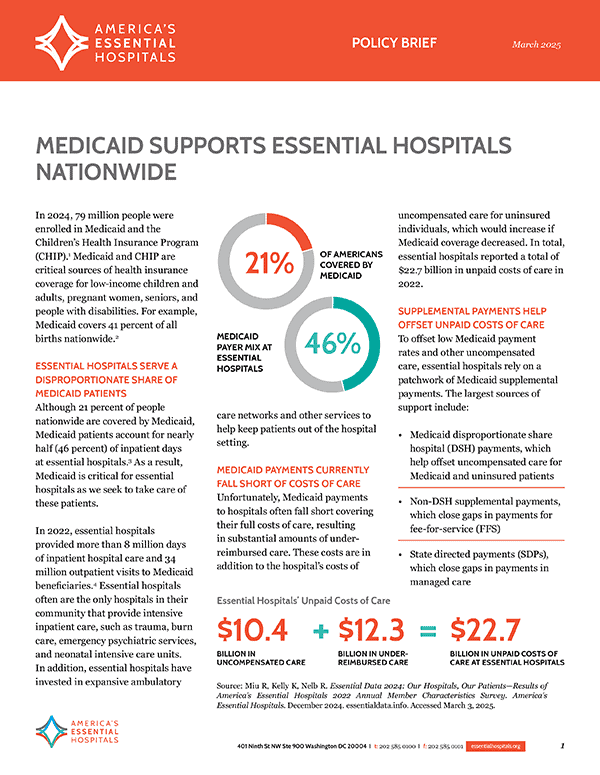
Policy Brief: medicaid supports essential hospitals nationwide
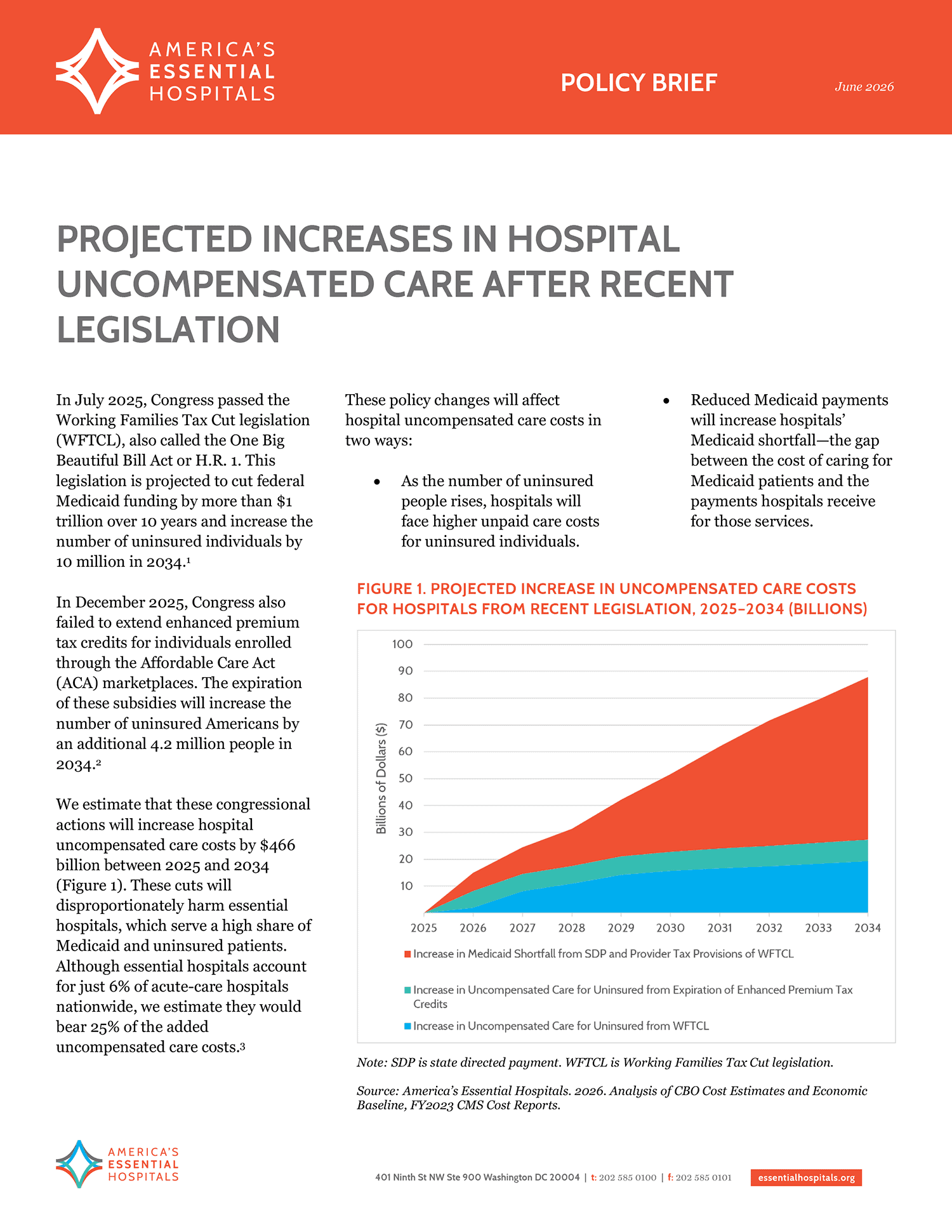
Policy Brief: Projected Increases in Hospital Uncompensated Care After Recent Legislation
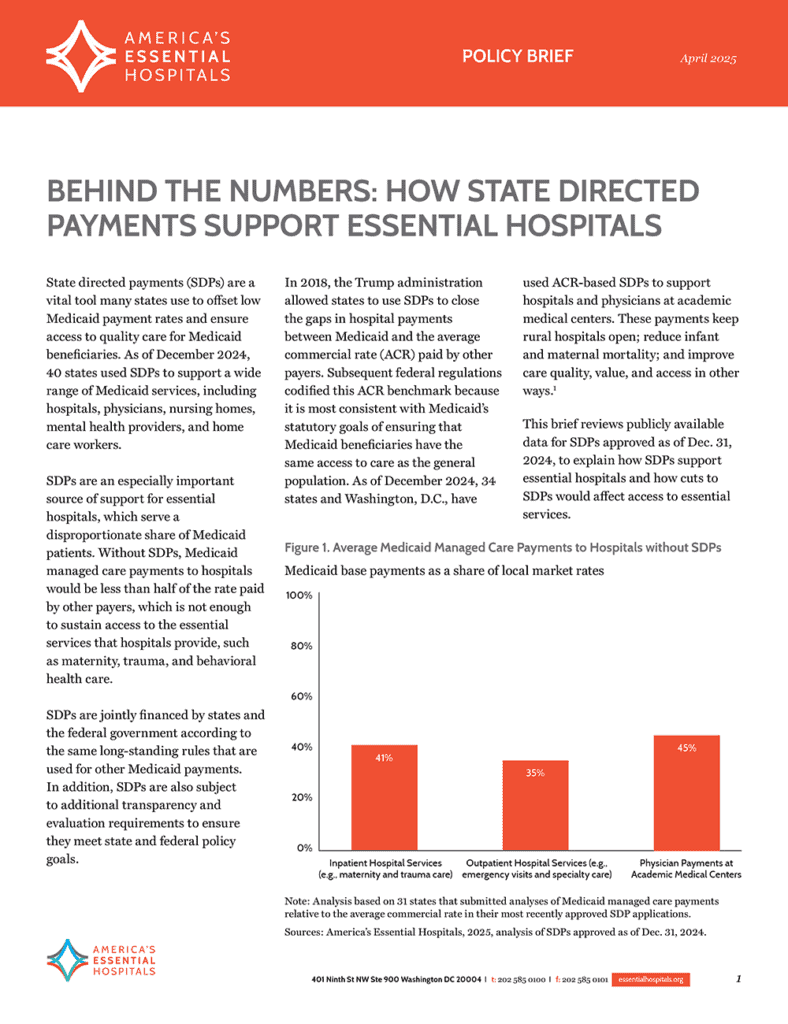
Policy Brief: State directed payments
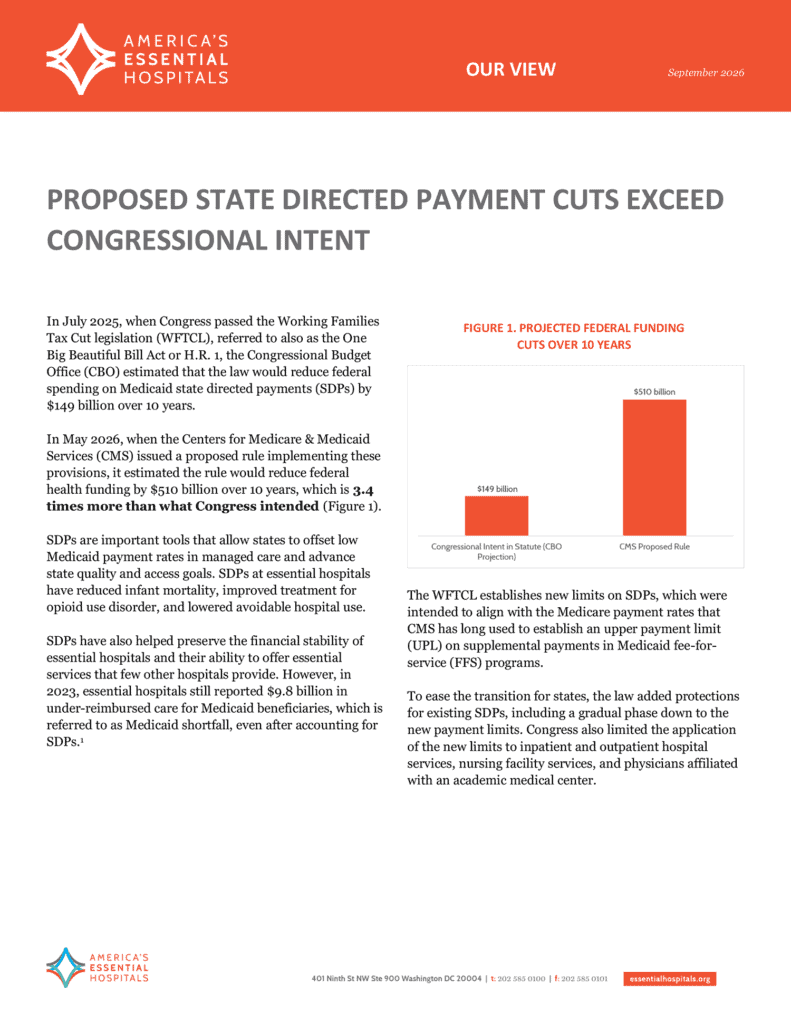
Position paper: Proposed State Directed Payment cuts exceed congressional intent
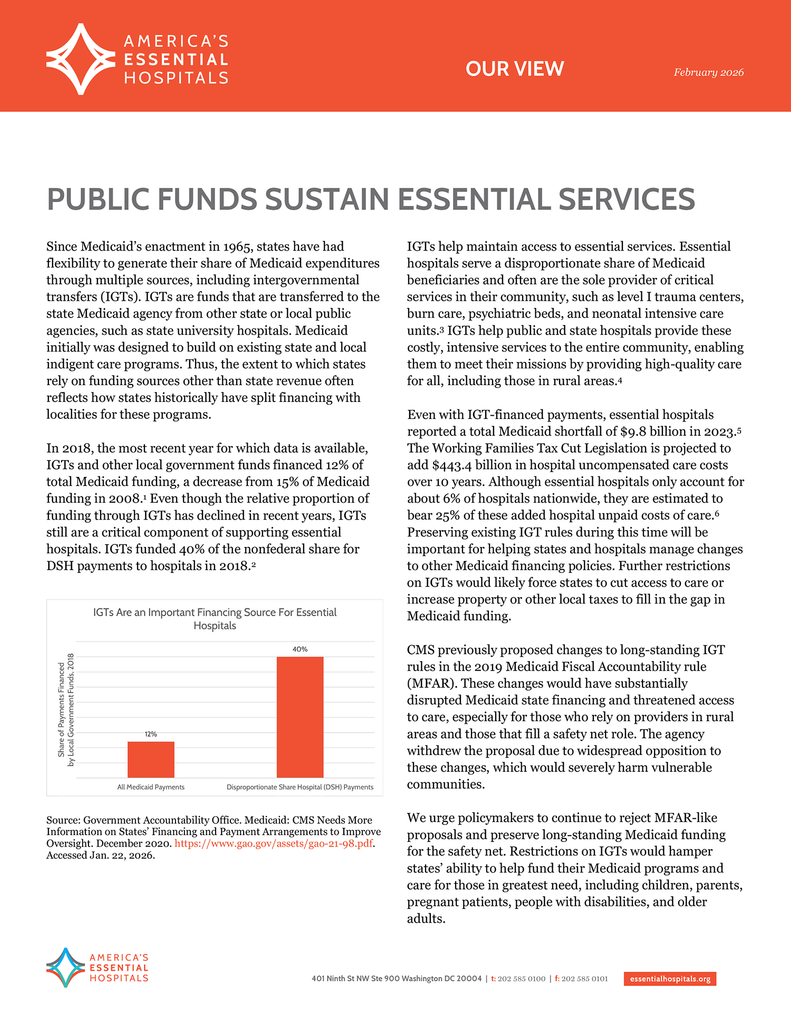
position paper: Public funds sustain essential services
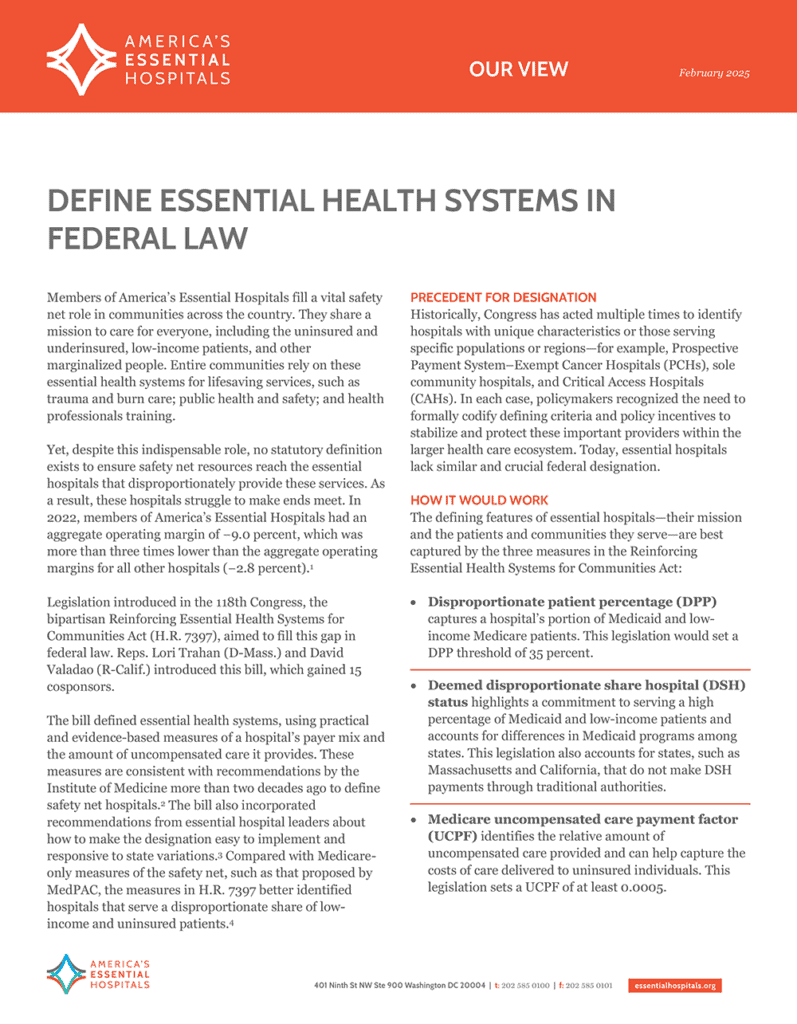
Position Paper: Federal Designation for essential hospitals
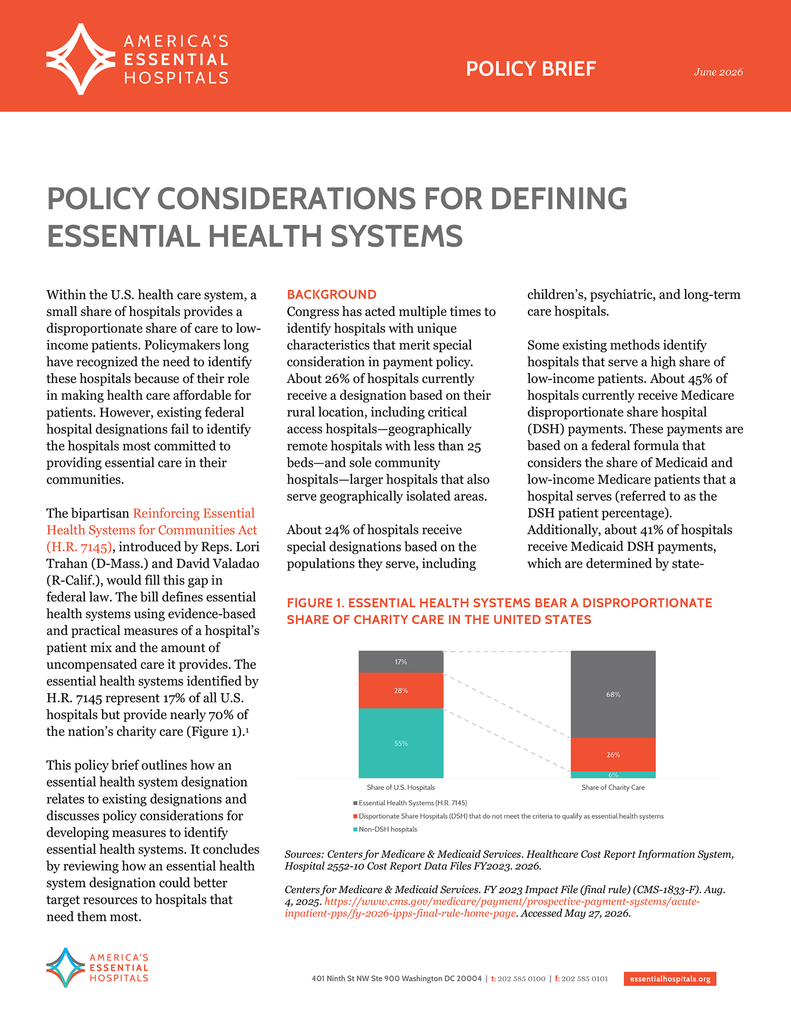
Policy Brief: Considerations for Defining Essential Health Systems
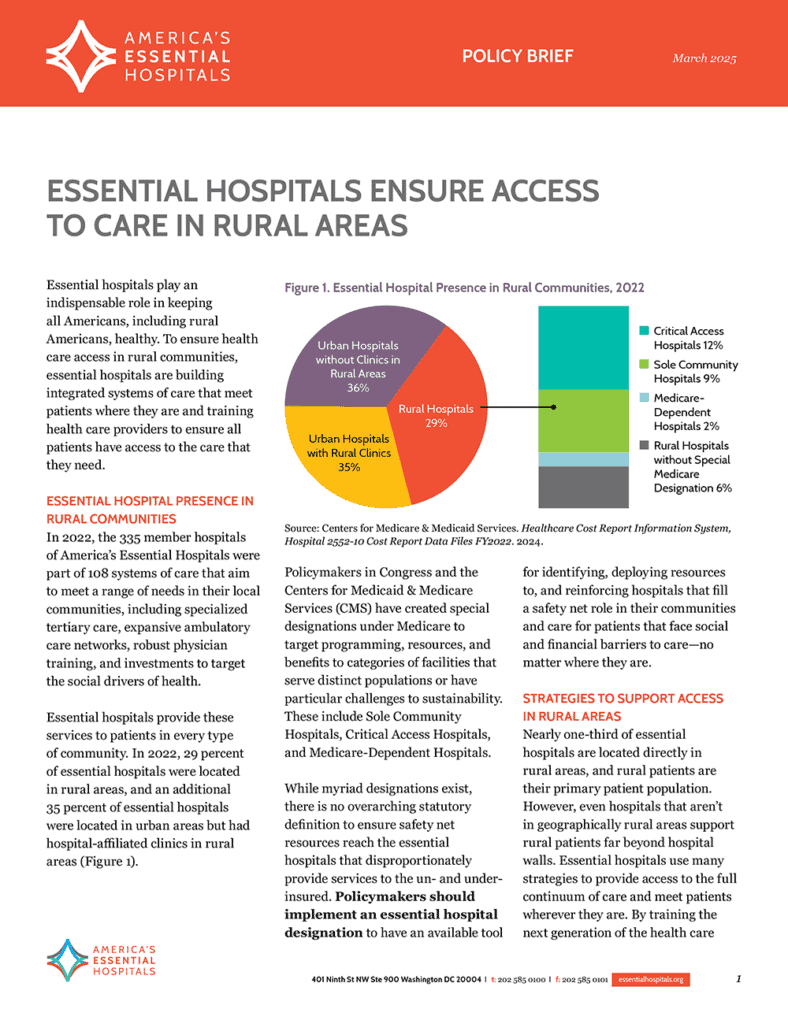
Policy Brief: Rural Health and Essential Hospitals
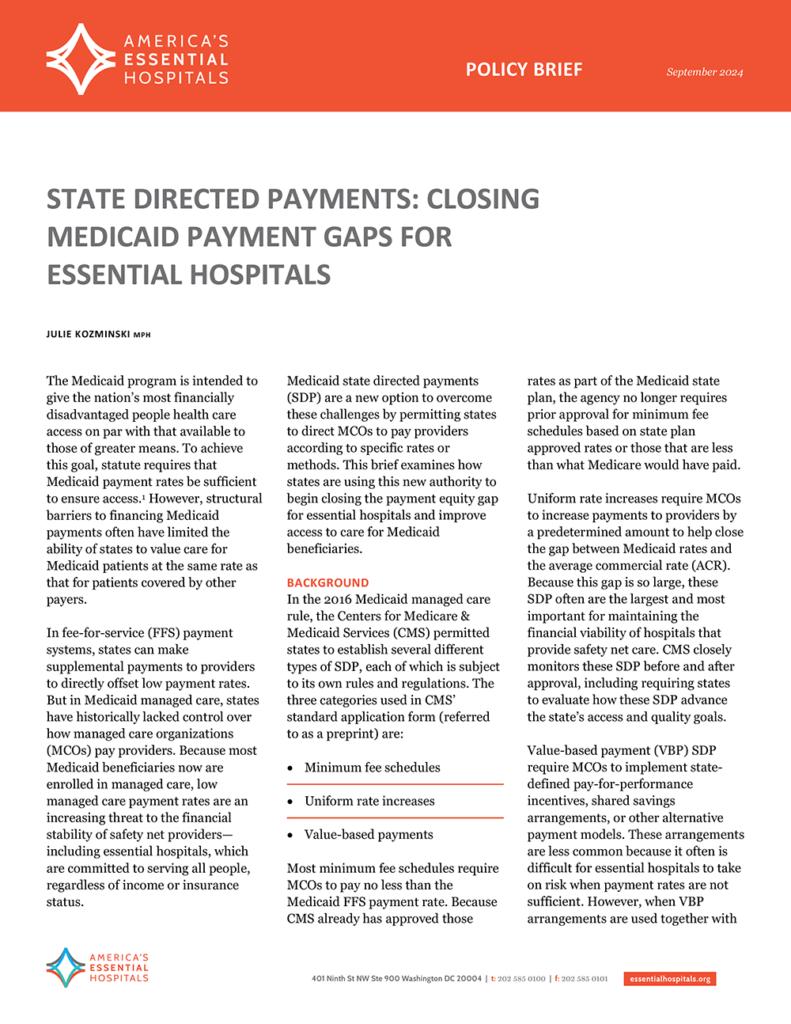
Policy Brief: State Directed Payments – closing Medicaid payment gaps for essential hospitals
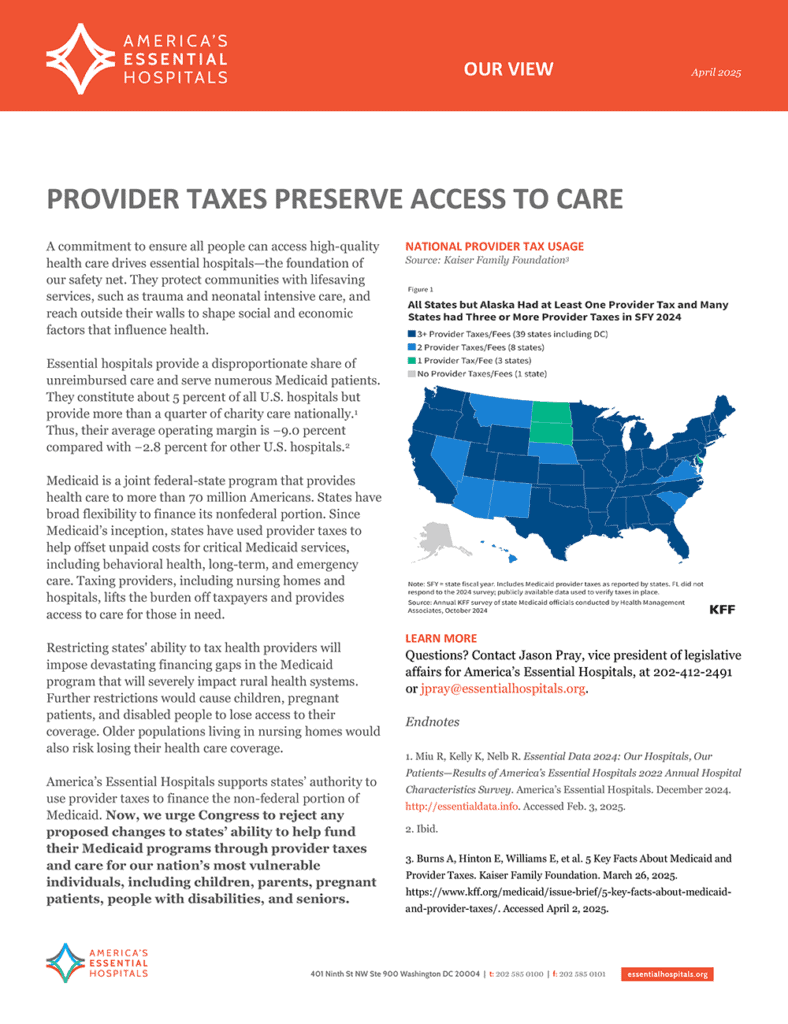
Position Paper: Provider Taxes
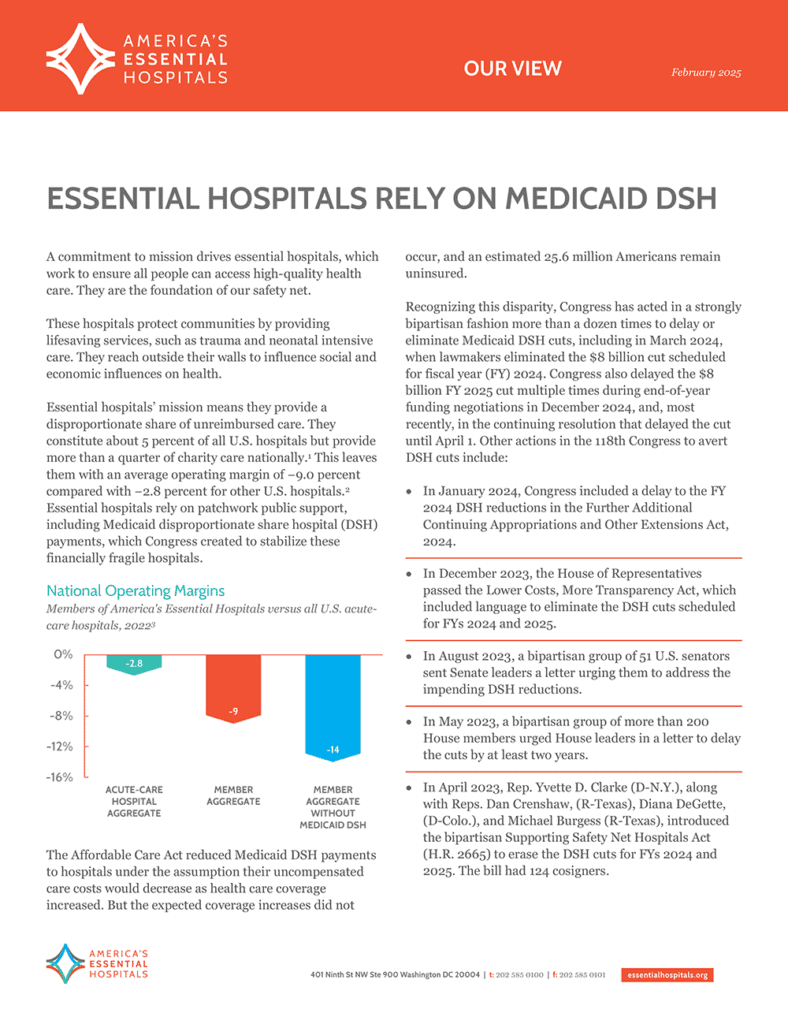
Position Paper: Medicaid DSH cuts