
Safety Net Funding at Risk
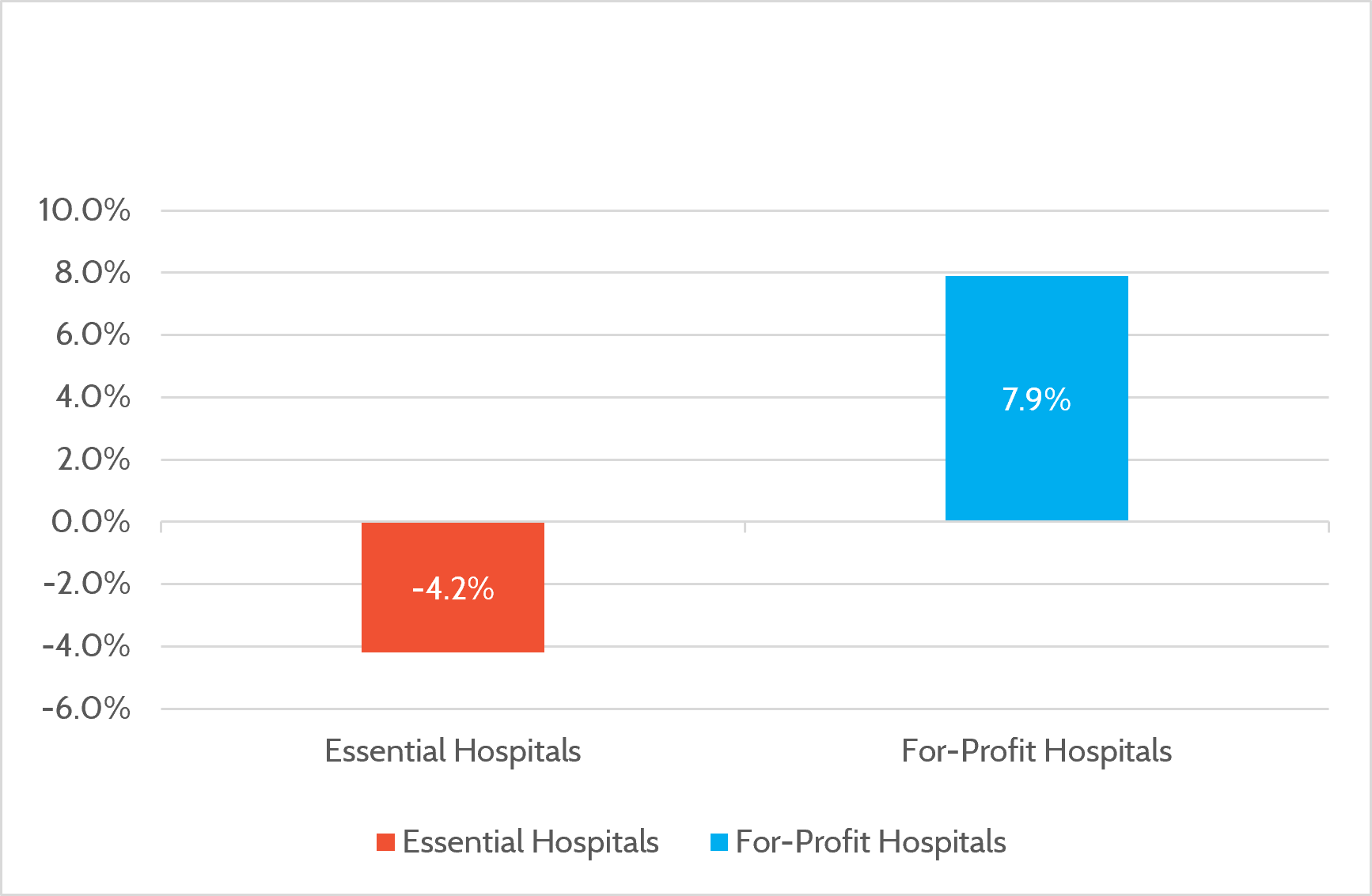
Proposed new policies will redirect safety net funding to for-profit hospitals and compromise essential hospitals’ access to 340B Drug Pricing Program discounts for care provided to low-income patients. Congress must act now to prevent these harmful cuts from taking effect when essential hospitals are already under significant financial strain.
Percent Change in Medicare Outpatient Payments Under 2027 Final Rule
Why 340B Matters
Congress created the 340B Drug Pricing Program in 1992 to help qualifying hospitals “stretch scarce Federal resources as far as possible, reaching more eligible patients and providing more comprehensive services.” Pharmaceutical manufacturers are required to sell covered drugs to 340B providers at discounted rates. For more than 30 years, essential hospitals have relied on 340B discounts to aid patients, support and expand service lines, and improve health outcomes.
Patients and communities served by 340B providers benefit from the program. Essential hospitals provide myriad critical services, including obstetric, burn, psychiatric and behavioral health, infectious disease, and trauma care. Hospitals often lose money on these services because reimbursement falls short of the cost of providing them. 340B savings help hospitals sustain these services, support medication access, and serve patients who might otherwise face barriers to care.

What Can Congress Do?
Congress should stop the administration from redirecting safety net funding to for-profit hospitals and stop rebate models that take resources away from patient care
Stop Medicare Cuts
Congress should stop misguided and harmful cuts to Medicare drug payments for 340B providers from taking effect Jan. 1, 2027, by passing legislation before the end of 2026 to block or delay implementation of OPPS cuts.
Stop Rebate Models
Lawmakers should pass the bipartisan 340B Rebate Model Delay Act, H.R. 10770.
Resources
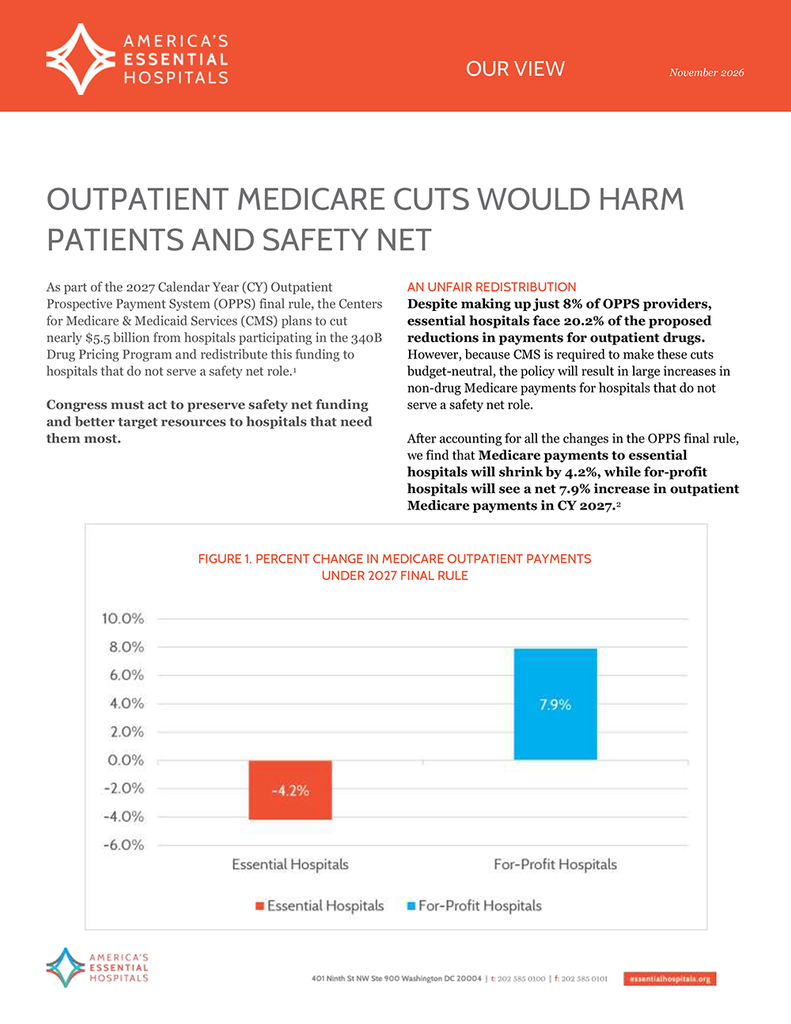
Position paper: Outpatient Medicare Cuts Would Harm Patients and Safety Net
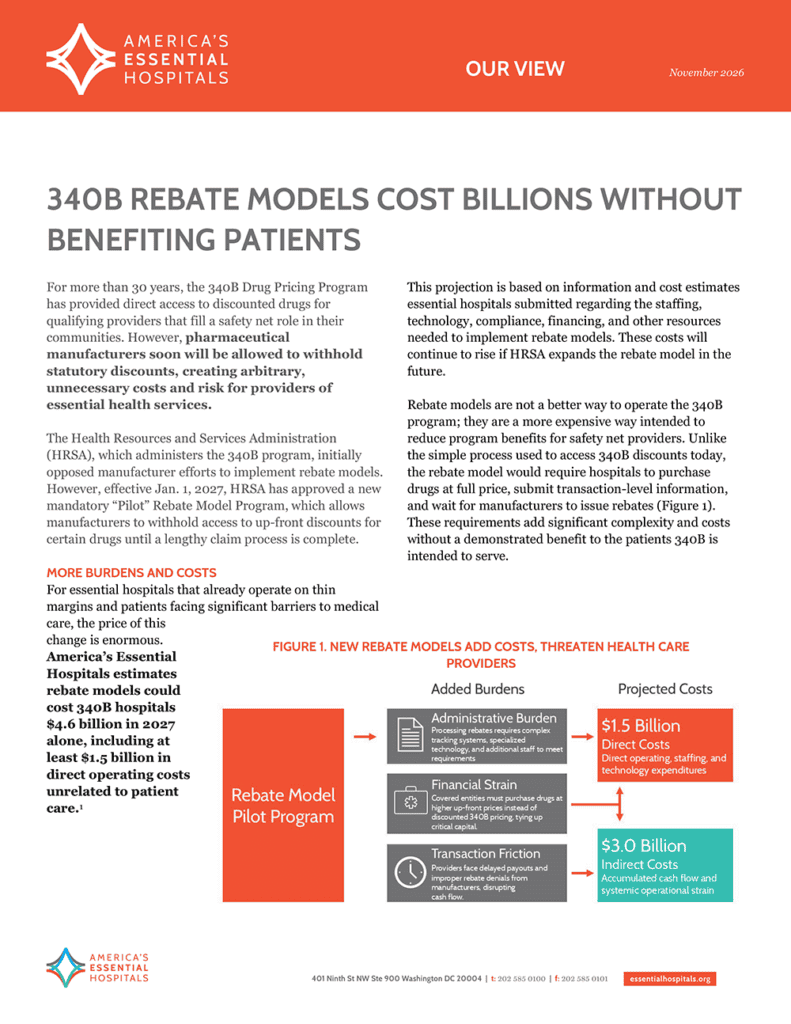
Position paper: 340B Rebate Models Cost Billions Without Benefiting Patients
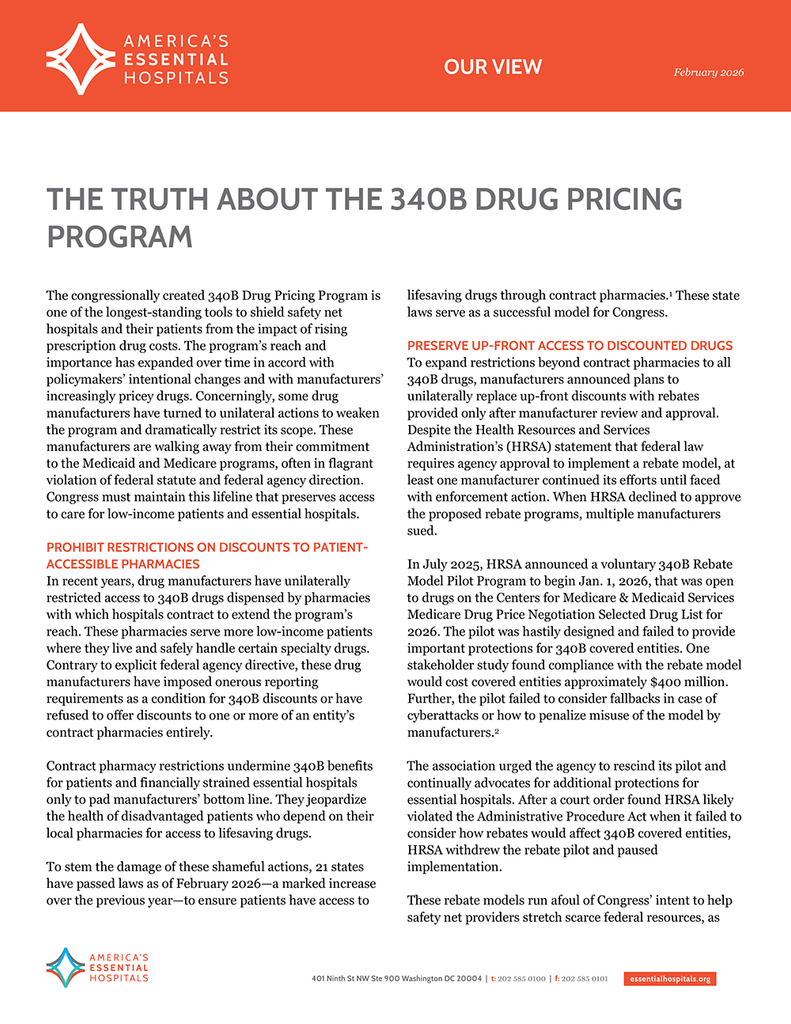
Position paper: The Truth About the 340b program