

A Conversation With Michelle Greenhalgh, MA
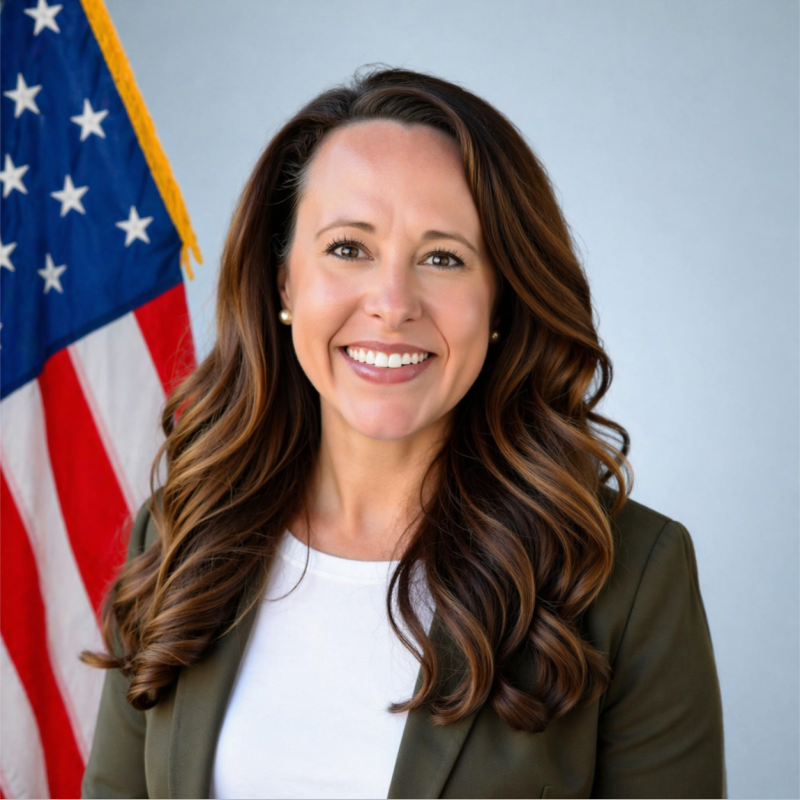
Director of Federal Healthcare Policy and Advocacy
Stony Brook Medicine
Each quarter, we feature a Federal Action Network (FAN) member leading the charge on Capitol Hill to protect essential hospitals.
This quarter, we spoke with Michelle Greenhalgh, MA, director of federal healthcare policy and advocacy at Stony Brook Medicine, in Stony Brook, N.Y. She discussed the upcoming midterm elections, Stony Brook’s federal priorities, and how she approaches meetings with both chambers of Congress.
You have such a robust professional background, from working on the Hill and at SAMHSA to also working at various associations. How did those experiences prepare you for your current role at Stony Brook Medicine?
Experience in the House, Senate, administration, and physician associations gave me a strong understanding of how advocacy works from every side. It also taught me how to build coalitions and use the right strategies to advance an issue—skills that were especially valuable in our efforts over the past few years to repeal the Section 203 Medicaid formula change that passed as part of the Consolidated Appropriations Act, 2023 (P.L. 116-260).
Tell us about your current role as director of federal healthcare policy and advocacy at Stony Brook Medicine. What drew you to the position and what continues to excite you about the role?
I serve as Stony Brook Medicine’s director of federal healthcare policy and advocacy, focused on advancing policies that support our hospital, research enterprise, and patients. I was drawn to the role because I love working with clinicians and medical students/residents and wanted to gain experience in academic medicine. I also wanted to better understand how hospital financing works and wanted to play a role in expanding the federal clinical research opportunities for health systems in the Northeast, where I grew up. I especially enjoy showcasing Stony Brook’s innovative care delivery models like our Mobile Stroke Unit and cutting-edge research like our brain research done through our PET Scan machine to policymakers.
Having worked in both the House and Senate, how do you approach meetings with members and staff in each chamber now that you’re on the other side of the table?
Relationships and trust are fundamental to effective advocacy. Before each Hill meeting, I prepare extensively—this involves solidifying my own understanding [of] the issue, researching the member’s priorities and district dynamics, and being able to explain how Stony Brook Medicine and the issue at hand affects local constituents. I also focus on being concise and practical, using data, visuals, and clear examples to make complex issues easy to understand.
What is a current federal advocacy priority for Stony Brook Medicine and what are some of the strategies you’re using to advance it?
Our priorities center on financial stability for our safety net academic health system, including protecting Medicaid and other hospital reimbursement, sustaining research funding, and securing our outstanding Federal Emergency Management Agency reimbursement for COVID-19 care. I work closely with hospital system leadership, our finance department, and our clinical and academic medicine teams to understand policy impacts, then translate those implications into real-world examples for our Long Island congressional delegation.
You’ve been recognized for your work to expand access to mental health treatment, which has been a consistent thread throughout your career. How does that work continue to shape your advocacy?
My mental health and substance use disorder advocacy experience taught me how to move an issue from policy development through implementation and funding deliberations on the Hill. The experience also bolstered my ability to form and lead coalitions and how to ensure that all interested parties are pushing in the same direction towards the same goal. That experience continues to shape my approach at Stony Brook: Understand the problem, identify a practical solution, and work collaboratively with interested parties and policymakers to build bipartisan support. It also reinforced the importance of empathy and meeting people where they are.
There is a lot of noise in D.C. right now about midterm elections. How are you predicting they will impact Stony Brook and health care policy more generally?
I try to keep the focus on issues that matter regardless of party, particularly access and affordability. Stony Brook Medicine is an important economic and health care driver for Long Island, supporting patients, jobs, research, and community health. By emphasizing those shared interests, I can work effectively with members and staff on both sides of the aisle, regardless of the election outcome.
During your time at the Substance Abuse and Mental Health Services Administration (SAMHSA), you built and led the legislative team. Can you tell us about that experience, including some of the challenges you encountered and valuable lessons you learned along the way?
SAMHSA was one of the most challenging and rewarding experiences of my career. I joined during the COVID-19 pandemic when the agency was managing significant increases in funding and expansion of its grant projects, and implementation of the Consolidated Appropriations Act, 2022, which included more than 250 legislative directives just for SAMHSA alone. I built and staffed the legislative affairs office, which included hiring six new staff and opening our D.C. satellite office. I also established new, more efficient workflow processes, and strengthened relationships between Hill offices and agency experts. The experience taught me how to lead dynamic, rapidly changing policy and political initiatives, develop strong teams, and translate complicated policy into clear, actionable messages.
How do you leverage resources like the America’s Essential Hospital’s Federal Action Network (FAN) to support your advocacy priorities and benefit your organization?
America’s Essential Hospitals’ FAN and staff have been invaluable as I transitioned from federal government to hospital and academic medicine. The network played an important role in the Section 203 coalition and helped advance the provision into this year’s February appropriations package. [The association’s] educational programs and Federal Advocacy Assembly have also strengthened my understanding of hospital financing, expanded my hospital network, and informed my day-to-day advocacy.
Tell us about something fun you did during the August recess!
During the August recess, I competed in my fourth Maryland Governor’s Cup Regatta aboard a J-124 sailboat called Lucky Eights. I have raced with Lucky Eights consistently since 2020, so the team and I have a great fun but competitive dynamic. We raced overnight from Annapolis to St. Mary’s City, covering about 70 nautical miles in just under 16 hours and finishing fourth.
Sailing is a lot like lobbying in that you need to build trust and camaraderie with your teammates and often find that one person’s weakness is another person’s strength, so we are all constantly learning from and depending on each other. It was a great experience and good preparation for our team’s planned 2027 Annapolis-to-Newport (A2N) campaign. A2N is a biannual race where competitors start in Annapolis, Md., and race down the Chesapeake, exiting into the Atlantic and continuing north all the way until they reach Newport, R.I. Racing continuously for over 400 miles offshore over multiple days without stopping will be difficult but thrilling, and I can’t wait to test our skills as a team as we undertake this challenge next summer.
Author